Showing posts with label Electric Vehicle. Show all posts

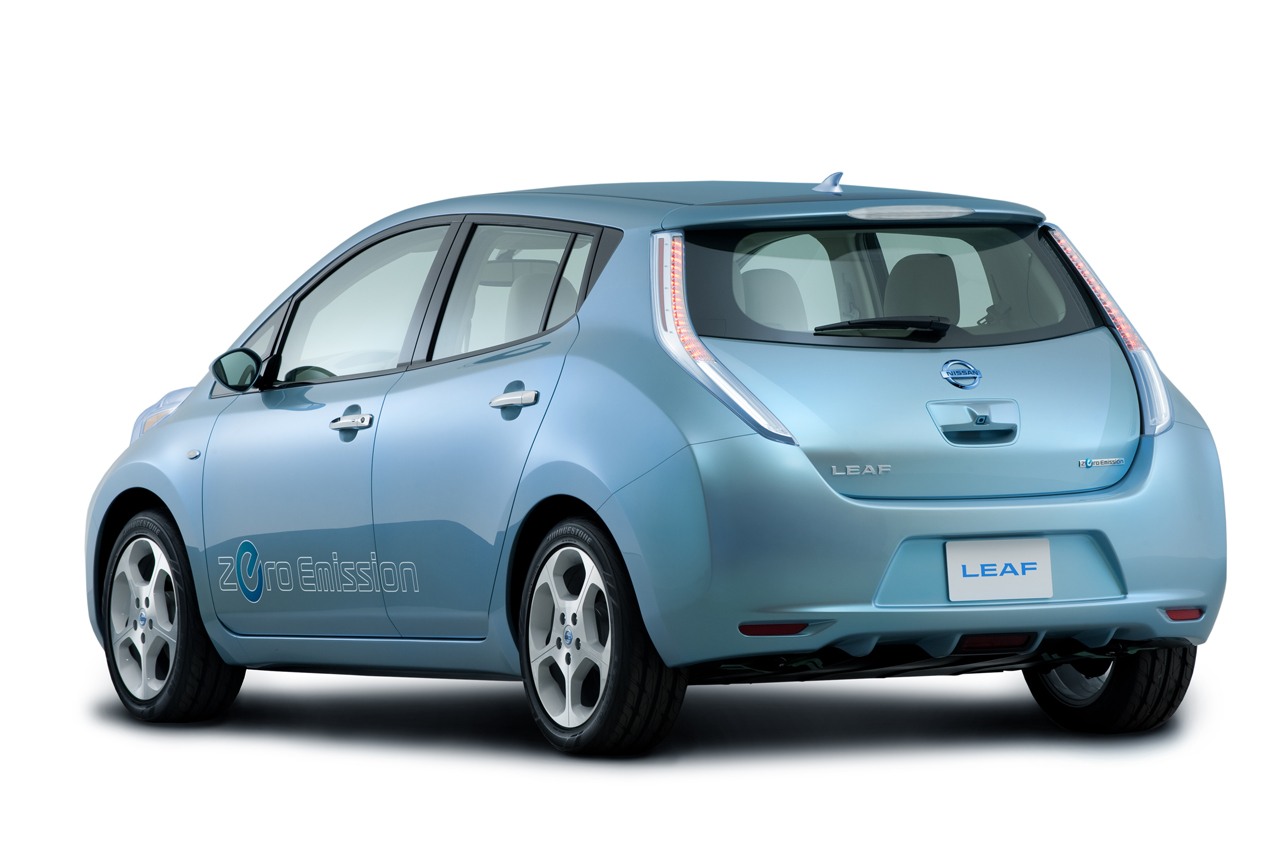
Nissan Leaf Wins Award For European Car Of The Year


Nissan Leaf takes away the title of European Car of the Year leaving behind all other hatchbacks and saloons standing in line.

Nissan Leaf is based on a high end technology base which is the major reason behind its superior performance making it the best in class option. The car is powered by a 120 bhp electric motor along with efficient lithium-ion batteries. With these strong figures, the car becomes capable of reaching the top speed of 145 kph and on one charge and can smoothly travel a distance of 175Km. The car not only considers the environment factor but also assures superior comfort to the users and that is the major reason why Nissan Leaf was able to beat top car models and grab the graceful title of European Car Of the Year. It comes with parking camera, advanced telematics, air conditioning system etc.


2011 Nissan Leaf 2011 Nissan Leaf 2011 Nissan Leaf 2011 Nissan Leaf 2011 Nissan Leaf 2011 Nissan Leaf 2011 Nissan Leaf 2011 Nissan Leaf 2011 Nissan Leaf 2011 Nissan Leaf 2011 Nissan Leaf 2011 Nissan Leaf 2011 Nissan Leaf 2011 Nissan Leaf 2011 Nissan Leaf 2011 Nissan Leaf


Press Release

100% ELECTRIC NISSAN LEAF PICKS UP EUROPEAN CAR OF THE YEAR 2011 TROPHY


The trophy recognizing the revolutionary Nissan LEAF as Europe's Car of The Year 2011 was handed over to Nissan Motor Co.'s President and CEO Carlos Ghosn in a special ceremony at the Pavillion Gabriel in Paris.

To win the award, the 58 CoTY members - leading motoring journalists from 23 European countries - placed Nissan LEAF ahead of six conventional new cars on the shortlist. It is the first time in CoTY's 48-year history that the annual award has been won by an electric vehicle.

"I am convinced that we will see other electric cars named Car of the Year in the future. But when we do, we must always remember that only one can be the first. And that is why Nissan LEAF Car of the Year 2011 is - and will remain - so very special," said Håkan Matson, president of the CoTY jury, speaking at the ceremony.

"It is a great honor for Nissan LEAF to be recognized as the European Car of the Year - the first all-electric car to receive this distinction. Like previous Car of the Year winners, Nissan LEAF is an appealing, competitive car, with no compromise on style, features, safety, performance or handling. Yet it stands apart as an innovative car that reflects a clear vision of the future of transportation - a vision of sustainable mobility," said Ghosn after receiving the trophy.

Nissan LEAF is powered by an in-house developed compact electric motor and inverter in the front of the car driving the front wheels. The AC motor develops 80 kW of power and 280 Nm of torque, enough for a maximum speed of 145 km/h (90 mph). The electric motor is powered by an advanced laminated lithium-ion battery with a power output of more than 90 kW. Developed by the Automotive Energy Supply Corporation (AESC), a joint venture between Nissan and electronics giant NEC Corp., the breakthrough battery has the capacity to store twice as much energy as the previous generation battery.

The zero-emission car is fully equipped with features such as regenerating braking, air conditioning, satellite navigation and a parking camera. Innovative smart phone connectivity will allow an owner to heat or cool the interior of the car remotely via a mobile phone. The single option is a solar panel mounted in the rear spoiler.

Pre-orders for Nissan LEAF have reached more than 27,000 units globally. The zero-emission car is currently built in Japan, but will also be manufactured in the United States and United Kingdom when new manufacturing facilities there open in late 2012 and early 2013 respectively. Deliveries to individual customers in Japan and the US began in December. In Europe, deliveries will start shortly to Portugal, the Republic of Ireland, the United Kingdom and the Netherlands followed by more markets later in the year.

The Renault-Nissan Alliance aims to be a global leader in zero-emission mobility and is taking a comprehensive approach encompassing both the product and the infrastructure required to support the mass marketing of electric vehicles. To date, the Alliance has entered into more than 90 partnerships with governments, municipal authorities and companies worldwide to prepare the markets and infrastructure for the successful adoption of electric vehicles.

* The current version of the coveted marble trophy, introduced in 2004, was created by Emmanuel Zurini, a French artist famous for his automotive sculptures. Zurini was a leading Grand Prix photographer in the 1960s before turning to sculpture in 1975. It is the third specially created trophy in the history of the Award.

Nissan has won the CoTY award before. In 1993, the Micra became the first Japanese-badged car to win the accolade and started Europe's love affair with the little car that continues today with the recent launch of the latest generation Micra in late 2010.

2012 Tesla Model S 【Video】


Tesla has released a new video that shows the Model S in action.

The North American company has divided its vehicle testing stage into two phases, Alpha and Beta, and this next video shows the Tesla Model S, which as you can notice, features a slightly modified front fascia, during the Alpha phase which began in 2010. 

The 2012 Model S is rear drive. The compact electric motor and transmission assembly — much smaller than a conventional internal combustion engine and gearbox — is mounted behind the rear axle line and under the trunk floor. More than 7,000 lithium ion battery cells are packaged in a reinforced structure that helps comprise the vehicle's floorpan. Cargo volume exceeds 30 cubic feet thanks to functional front and rear luggage areas.

As we have previously reported, the Model S is motivated by an electric motor that is powered by a 42 kWh lithium-ion battery. It enables the car to accelerate from 0-60 mph in 5.6 seconds, hit a top speed of 120 mph (193 km/h), and travel up to 300 miles (483 km) on a single charge.


2012 Telsa Model S2012 Telsa Model S2012 Telsa Model S2012 Telsa Model S2012 Telsa Model S2012 Telsa Model S2012 Telsa Model S


Detroit 2011: Mercedes-Benz SLS AMG E-Cell 【Video】


Mercedes has announced it will produce an electric version of its SLS supercar starting in 2013. The new supercar features four electric motors, and has a killer kick of 526 hp and 649 lb-ft of torque and is capable of reaching zero to 62 mph in just four seconds flat, all features that no one was really paying attention to because we were too busy ogling the jaw-dropping paintjob on this sweet ride - a screaming electric yellow!

On the styling front, the E-Cell features LED headlights, a wider radiator grille, a revised hood, and a more aggressive rear diffuser. Other goodies include matte black accents, an extendable front splitter (that moves 7cm downwards at speeds above 120 km/h), and exclusive 10-spoke light-alloy wheels.

On the prototype, Stuttgart electric car specialists and engineers replaced the “stands” SLS AMG's 571HP 6.3-liter V8 petrol engine with four electric motors placed near the wheels effectively making it a four-wheel drive model. The gullwing with electric drive is part of the company strategy entitled "AMG Performance 2015" which aims to continually reduce fuel consumption and emissions.

The gasoline SLS AMG features a 405hp 5.5L V8 engine driving a traditional rear-wheel drive setup, while in the new 2013 Electric version a quartet of electric motors gives the E-Cell sure-footed four-wheel drive.

No detailed info was given on the production SLS E-Cell, but a Daimler source tells us the structure and floorpan are significantly altered from the internal-combustion model, and that there will be even more carbon fiber use to save weight. The peak horsepower and torque numbers are actually likely to rise from those of the prototype, and the car’s range will exceed 130 miles. The interior will be unique to the SLS E-Cell, too, with a futuristic touch-pad center console.


Mercedes SLS AMG E-Cell prototypeMercedes SLS AMG E-Cell prototypeMercedes SLS AMG E-Cell prototypeMercedes SLS AMG E-Cell prototypeMercedes SLS AMG E-Cell prototypeMercedes SLS AMG E-Cell prototypeMercedes SLS AMG E-Cell prototypeMercedes SLS AMG E-Cell prototypeMercedes SLS AMG E-Cell prototypeMercedes SLS AMG E-Cell prototypeMercedes SLS AMG E-Cell prototypeMercedes SLS AMG E-Cell prototypeMercedes SLS AMG E-Cell prototypeMercedes SLS AMG E-Cell prototypeMercedes SLS AMG E-Cell prototypeMercedes SLS AMG E-Cell prototypeMercedes SLS AMG E-Cell prototypeMercedes SLS AMG E-Cell prototypeMercedes SLS AMG E-Cell prototype


Press Release

Mercedes-Benz at the NAIAS 2011 in Detroit - Fascination of electric mobility.


SLS AMG E-CELL: Electric super sports car enters series production
B-Class F-CELL: With hydrogen around the world

Detroit - Just ahead of the 125th birthday of the automobile on January 29, its inventor is setting further groundbreaking accents in the field of electromobility. At the North American International Auto Show, Mercedes-Benz today announced its decision to put the SLS AMG E-CELL into series production. The battery-electric drive super sports car generates 392 kW (525 hp) and 880 Nm (649 lb-ft) of torque. The second piece of "electrifying" news - January 29 will see the official starting signal of the "Mercedes-Benz World Drive", the first journey around the world with fuel cell electric drive. Under the motto "125! Years of Innovation", Mercedes-Benz is showing in Detroit a complete spectrum of highly efficient and clean drives for the automobiles of today and tomorrow.

"The Mercedes-Benz SLS AMG E-CELL is the most technically advanced super sports car in the 125-year history of the automobile, and shows just how fascinating electromobility can be. Our customers will be able to order it from their Mercedes-Benz dealers from 2013 onwards", said Dr. Dieter Zetsche, Chairman of the Board of Management of Daimler AG and Head of Mercedes-Benz Cars, at the Mercedes press conference. Zetsche delivered his words on the redesigned Mercedes show stand, which offers a three-dimensional experience of the Stuttgart automaker's multi-faceted driveline strategy on an area of almost 1,800 square metres. "Our stand architecture vividly shows how single-mindedly we are moving forward," continued Zetsche. "We are driving on a multi-lane highway into the future - one that we have populated with all relevant driveline technologies. The spectrum ranges from high-tech internal combustion engines, like our new gasoline direct injection units and our BlueTEC diesels, through a variety of types of hybrids to powerful battery and fuel cell electric drives with full everyday usability."

Mercedes-Benz F-CELL World Drive - around the world with hydrogen

At the end of 2009, Mercedes-Benz put its first electric vehicle with fuel cell drive made under series production conditions on the road with the B-Class F-CELL. As part of a spectacular road trip, the brand with the star now wants to provide impressive proof of the enormous potential offered by fuel cell technology - on the occasion of the official birthday of the automobile on January 29, three fuel cell vehicles from the current series production run will set off from Stuttgart on the "Mercedes-Benz World Drive" - 125 days long, across four continents and through 14 countries. Each of the three vehicles will cover around 30,000 kilometres (18,750 miles).

"Electric cars with fuel cells have what it takes to revolutionise our mobility once more," said Dr. Thomas Weber, Member of the Board of Daimler AG, responsible for Group Research and Mercedes-Benz Cars Development. "The hydrogen-driven B-Class F-CELL combines several key benefits. Its drive is efficient, clean and fully suitable for everyday use. Plus, it delivers local zero-emissions driving with a long range of around 400 kilometres (240 miles), short refueling times of only three minutes and no shortage of driving pleasure." This is provided courtesy of the 100 kW (136 hp) electric motor that generates a refined 290 Nm (214 lb-ft) of torque. The B-Class F-CELL achieves an NEDC (New European Driving Cycle) consumption figure equating to just 3.3 litres of fuel (diesel equivalent) per 100 kilometres. Its EPA fuel economy stands at 54 mpg.

Commitment to the establishment of a hydrogen fuel station network

Mercedes-Benz has now developed fuel cell technology for automotive drive to series production maturity. However, while the vehicle technology of the B-Class F-CELL is fully mature, the fuel station infrastructure represents limitations. Dr. Weber: "With our ‘F-CELL World Drive', we want not only to demonstrate the capability and everyday usability of fuel cell drive, but also to lobby for the establishment of a hydrogen fuel cell network. This will make the B-Class F-CELL a global ambassador for a new, local zero-emissions auto-mobility of the future."


In order to ensure fuel supply to the participating vehicles on all stages of the tour, a hydrogen fuel tanker will be used at all the start and finish points along the route. Dr. Weber: "Our ‘World Drive' will also serve to motivate governments and energy suppliers to build a suitable refueling infrastructure. Our objective is clear - in future, drivers should be able to fill up with hydrogen anywhere in the world, in the same way that they can today with gasoline and diesel."


2011 Detroit Auto Show: Ford C-Max Energi and C-Max Hybrid


Ford has unveiled two new C-MAX hybrids at the North American International Auto Show.

The C-Max is essentially the same thing as the Grand C-Max that other markets get with its three-rows of seats and sliding rear doors. The C-Max Hybrid and C-Max Energi are actually based on the shorter-wheelbase five-passenger C-Max that is sold in Europe.

The C-Max Hybrid uses the Blue Oval's next-generation gasoline/electric powertrain technology, and we're told that fuel economy will be higher than the 41 miles per gallon that's currently on tap in the Fusion Hybrid sedan. By building upon the powersplit technology currently used in the automaker's hybrids, Ford says that the C-Max Hybrid will be able to operate in electric mode at speeds higher than 47 miles per hour.

Both hybrids are derivatives of the 2012 C-Max, a compact crossover that shares its underpinnings with the redesigned 2012 Ford Focus.


2014 Ford C-MAX Energi 2014 Ford C-MAX Energi 2014 Ford C-MAX Energi 2014 Ford C-MAX Hybrid 2014 Ford C-MAX Hybrid 2014 Ford C-MAX Hybrid


Press Release

FORD SUPERCHARGES ELECTRIC VEHICLE PLAN, UNVEILING NEW C-MAX ENERGI AND C-MAX HYBRID PRODUCTS

  • Ford will launch C-MAX Energi, its first-ever production plug-in hybrid electric vehicle, and C-MAX Hybrid, a full hybrid variant, in North America in 2012 and Europe in 2013
  • Both versions of the five-passenger multi-activity vehicle will leverage the company's global C-car platform, critically acclaimed powersplit hybrid architecture, next-generation driver information features and advanced, lighter and smaller lithium-ion (Li-ion) battery systems
  • C-MAX Hybrid is targeted to deliver better miles per gallon than Ford Fusion Hybrid, the most fuel-efficient sedan in America
  • C-MAX Energi targets more than 500 miles (800 kilometers) of driving range using the battery and engine, more than any other plug-in or extended-range vehicle. It also targets AT-PZEV status and delivers better charge-sustaining fuel economy than Chevrolet Volt

Detroit, Jan. 10, 2011 - Ford today revealed two next-generation hybrid vehicles - including its first production plug-in hybrid electric vehicle - at the 2011 North American International Auto Show, bringing consumers more choice, versatility and style for high-mileage family-friendly vehicles.

Ford C-MAX Energi plug-in hybrid and C-MAX Hybrid are based on the new Ford C-MAX five-passenger multi-activity vehicle, and each will offer high mileage and low emissions as well as distinctive body design and a flexible interior. The plug-in hybrid and third-generation full hybrid leverage Ford's global C-car platform, acclaimed powersplit architecture, next-generation driver information features and advanced lithium-ion battery systems.
"C-MAX Energi and C-MAX Hybrid will be perfect for families looking to maximize their hybrid car experience," said Nancy Gioia, Ford director of Global Electrification. "Thanks to the versatile interior, these cars are going to appeal to environmentally conscious consumers who need room to grow."

C-MAX Hybrid is targeted to deliver better fuel economy than the 41 mpg Ford Fusion Hybrid, the most fuel-efficient sedan in America today. It builds on the success of the critically acclaimed powersplit architecture Ford uses in its current hybrids, allowing it to operate in fuel-saving electric mode beyond 47 mph.

Both the C-MAX Energi and C-MAX Hybrid models will be built alongside the all-new 2012 Ford Focus and Focus Electric at Ford's Michigan Assembly Plant in Wayne, Mich. The plant's production is powered in part by one of the largest solar energy generator systems in the state. The C-MAX Energi and C-MAX Hybrid vehicles sold in Europe in 2013 will be built at Ford's plant in Valencia, Spain, starting in 2013.

The plug-in advantage
Targeted to achieve AT-PZEV (Advanced Technology Partial Zero Emissions Vehicle) status, C-MAX Energi provides maximum fuel efficiency by pairing a high-voltage lithium-ion battery and electric traction motor with a high-efficiency Atkinson-cycle gasoline engine. This allows it to run in electric mode before using the gasoline engine.

C-MAX Energi will offer more than 500 miles (800 kilometers) of overall driving range using the battery and engine - more than any other plug-in or extended-range electric vehicle. C-MAX Energi delivers better charge-sustaining fuel economy than Chevrolet Volt.

In general, plug-in hybrid vehicles offer several benefits, including:

  • Electric driving range, perfect for emissions-free and silent city driving
  • Potential consumer savings on energy and fuel costs thanks to improved fuel efficiency over a standard hybrid
  • Reduced dependency on petroleum and increased energy independence
  • Reduced environmental impact through reductions in greenhouse gas emissions
  • Increased use of electricity from renewable energy sources (e.g. wind and solar), where available, for vehicle recharging

"A plug-in hybrid owner may make fewer trips to the pump to refuel because of its all-electric mode capability," said Derrick Kuzak, Ford vice president of Global Product Development. "Conveniently, they'll be able to recharge their plug-in hybrid at home overnight. And they'll never have to think about the vehicle's electric range, because the plug-in hybrid seamlessly shifts to fuel power when needed."

The development of Ford's first-ever production plug-in hybrid leverages more than 200,000 miles of road testing conducted in collaboration with a coalition of 10 utility companies, the U.S. Department of Energy, the New York State Energy Research and Development Administration and the Electric Power Research Institute.

Getting charged up
C-MAX Energi and C-MAX Hybrid will use advanced lithium-ion battery systems developed and assembled in-house by Ford in Michigan. Each system is smartly designed to maximize use of common, high-quality components, such as control board hardware that has proven field performance in Ford's current, critically acclaimed hybrid vehicles.

Li-ion battery packs offer a number of advantages over the nickel-metal-hydride (NiMH) batteries that power today's hybrid vehicles. In general, they are 25 to 30 percent smaller and 50 percent lighter, which makes them easier to package in a vehicle, and can be tuned to increase power to boost acceleration or to increase energy to extend driving distance.

While C-MAX Hybrid will operate much like today's hybrid vehicles, C-MAX Energi will benefit from daily charging to maximize its all-electric range. Thanks to the efficiencies of its right-sized battery system, the plug-in hybrid easily recharges 100 percent overnight on a 120-volt outlet.

A full charge in C?MAX Energi allows owners to increase their driving significantly in all-electric mode and drastically reduce their use of the on-board fuel engine.

On start-up, C-MAX Energi will operate in charge-depletion mode, providing electric driving range. When the battery has been depleted or certain conditions are met, it switches to charge-sustaining hybrid mode for continued optimal fuel efficiency.

Ford worked with a supplier to provide an industry-standard five-point plug for C-MAX Energi (and new Focus Electric) that is ergonomically comfortable to hold as well as durably and distinctively designed. The plug handle uses a matte-finished black rubber for a comfortable, non-slip grip and the plug head is shielded with a glossy white hard plastic to protect the electronics. The Ford Blue Oval trademark helps make the device immediately recognizable.

When the cord set connector is plugged into the vehicle's charge port, which is located conveniently between the driver's door and front wheel well, it activates a light ring that loops around the port twice in acknowledgement of connectivity. The light ring then illuminates in quadrants as the vehicle charges. Flashing quadrants represent charge in progress and solid-lit quadrants show stages of charge completion. When the entire ring is solidly lit, the vehicle is fully charged.

Smarter interface
C-MAX Energi owners will have access to a suite of driver information systems - on-board and off-board - designed to help them manage the recharge process, manage the most eco-friendly route on-board, remotely control their vehicle's charge and preconditioning settings, monitor battery state of charge and maximize energy efficiency to extend use of electric mode. C-MAX Hybrid owners also will benefit from the on-board features.

Among these tools is a unique execution of MyFord TouchTM driver connect technology, especially for electrified driving. It offers exceptional configurability of vehicle information, including fuel level, battery power level, and average and instant miles per gallon.

The cluster's new MyView feature allows drivers to access even more vehicle data such as the electrical demands of vehicle accessories, including air conditioning, which influences fuel economy and the electric driving range of the C-MAX Energi.

The Brake Coach feature helps to educate drivers to optimize their use of the regenerative brakes to recapture kinetic energy and send it back to the battery, also reducing wear on the brakes.

Long-term fuel efficiency can be displayed in two ways - either as a traditional chart or using an innovative display that shows a growing leafy vine on the right side of the cluster. The more efficient a customer is, the more lush and beautiful the leaves and vines become, creating a unique visual reward for the driver's efforts.

To reinforce the message, at the end of each trip a display screen provides distance driven, miles gained through regenerative braking, fuel consumed (average and total) and a regenerative braking score.

New MyFord Mobile
Off-board, C-MAX Energi owners in North America can maintain constant contact with the car anywhere they have mobile phone or web access using the Ford-developed MyFord Mobile.

MyFord Mobile enables access to a secure Ford website and smartphone/feature phone app to get instant vehicle status information, perform key functions remotely, monitor the car's state of charge and current range, get various alerts including when the vehicle requires charging, remotely program charge settings and download vehicle data for analysis.

The feature also allows the owner to program the vehicle to use electricity from the grid to heat or cool the battery and cabin while plugged in. For example, during hot summer months, owners can preprogram the car the evening before to be fully charged - and fully cooled to a particular temperature - by a certain time the following morning. Users can also locate the vehicle with GPS, remotely start the vehicle, and remotely lock and unlock the car doors.

Working with MapQuest®, MyFord Mobile can communicate charge station and other points of interest to C-MAX Energi using SYNC's Traffic, Directions and Information (TDI) service. Turn-by-turn guidance is provided by the in-car map-based Navigation System. Drivers can also get up-to-date charging station information in their vehicle directly through SYNC TDI simply by connecting to SYNC Services.

Value charging, powered by Microsoft
Using the value charging feature, powered by Microsoft, C-MAX Energi owners in North America will be able to optimize their home's energy use and vehicle recharging practices. Value charging allows Ford customers to reduce their electricity costs by taking advantage of off-peak or reduced rates from their utility without a complicated set-up process.

"Although C-MAX Energi owners won't have to plug in, by doing so they'll get the benefits of driving in electric mode for longer distances; that can mean fewer trips to the gas station and less emissions when driving," said Sherif Marakby, director of Ford's hybrid and electric programs. "That's why we'll be providing C-MAX Energi and C-MAX Hybrid owners with a user-friendly interface and tools like value charging that will help them get the most out of the vehicle's electric mode capability."

Proven powersplit technology
C-MAX Energi and C-MAX Hybrid build on the success of the critically acclaimed powersplit architecture Ford uses in its current hybrids, including the Ford Fusion Hybrid, winner of the 2010 MOTOR TREND Car of the Year® award.

In a powersplit hybrid, the electric motor and gasoline-powered engine can work together or separately to maximize efficiency. The engine also can operate independently of vehicle speed, charging the batteries or providing power to the wheels as needed. The motor alone can provide sufficient power to the wheels in low-speed, low-load conditions, and work with the engine at higher speeds.

While this system enables the current Fusion Hybrid to operate in fuel-saving electric mode up to 47 mph, Ford is targeting higher electric operating speeds for C-MAX Hybrid and even more capability for C-MAX Energi, which will have the advantage of additional battery power.

Ford's global C-car strategy
C-MAX Energi and C-MAX Hybrid are two of at least 10 new models or derivatives that Ford will launch around the world based on its new global C-car platform - Ford's first truly global One Ford platform.

Ford's new generation of C-segment vehicles will be sold in more than 120 markets and will account for more than 2 million units annually. The C-segment accounts for one in four cars sold worldwide today and, in conjunction with the B-segment, is expected to rise to 50 percent of all cars sold globally by 2013.

The all-new C-MAX lineup also introduces a number of advanced new technologies to the compact multi-activity vehicle class. More often found only on larger or more premium cars, these technologies are focused on enhanced comfort, safety and sustainability, including the availability of new and powerful, yet highly fuel-efficient, low-CO2 Ford EcoBoostTM gas engines.

The previous European C-MAX established a reputation for providing a balance of enjoyable driving dynamics and impressive comfort. The all-new model is set to take that performance to a new level, giving drivers a class-leading combination of responsive, sporty handling and overall refinement approaching the standards usually associated with larger, luxury vehicles.

C-MAX Energi and C-MAX Hybrid are two of five electrified vehicles that Ford will bring to the North American market during the next two years. In addition, the Ford Transit Connect Electric small commercial van, built in collaboration with Azure Dynamics, began initial production at the end of 2010, and Focus Electric will launch in late 2011. A second next-generation hybrid electric vehicle will be announced later and available in North America and Europe in 2012.